Thursday, June 24, 2010

Why your country has two names? IV


I have two main reasons for putting this extremely boring and poorly written paper as my new post.

The first reason is I want to reinforce my explanation in my previous Why your country has two names III that stated that the poverty of the Burmese people is deliberately created by Burmese government, not because the government is negligent, dumb and mad but they are very smart and far more adept at the basic theories of political sciences than most people could estimate.

People are somehow optimistic that after the election, the new government might be probably pressed to work for the people. Many the educated think the good ideas for the development of the people could probably be generated from debates in the parliament. There are many good examples that even real democracy doesn’t work in a number of countries, such as Bangladesh and many states in Northern India. There are numerous good examples that many countries ruled by mafia governments and gun groups, of course are far worse than our Buddhist military government, e.g. Eastern and central Europe, always have the democratic elections regularly. They always win or the parties under their patronage will be declared as victors in elections. The bottom people remain the same and far more demoralized every year. In our case of Burma, the electoral setup is just another machine system of this nasty Burmese government to legitimize their tyranny.

As long as, these clever idiots rule, don’t hope that the middle class might have some opportunity to breath at some other time. This clever government well-understood that the rise of the middle class is the death knell to them and their primary timeless duty as the government is to eliminate the middle class completely. Not because our government is bad and the middle class extinguishes, but it is what this government wants so that the middle class is to be extinguished.

The second reason is because I think the political experience of America is a good basic textbook to be learned if we want to understand the political mechanism of Democracy. Even for Lincoln, he fully realized that democracy is a learning process and the learning process will never be complete enough. Democracy is the best, but so much imperfect and people need to strive all the time to make it perfect but it will never become perfect and will always remain so much imperfect. In fact, this understanding of imperfection of democracy let founding fathers of America develop the current political mechanism prevailing in America.

As a matter of fact, we Burmese are formula-centered people and are very much tended to think that perfect formulas could bring excellent results. This kind of notion can be easily observed in our Burmese culture such as the “wish-everything-you-get” tree; or a socialist utopia’s saying and fancy belief that is still prevailing our society, “showering with cooking oil, warming home with medical roots, rice piling up like a mountain” if we have a good government; or today’s popular attitude that urge most of us to think we just need to find a money-generating niche and ride with it forever. My second reason also focuses on learning basic reasons for feeling bad about those moral ineptitudes by observing the empirical evidence to know how democracy in America is too formulaless to make people ever find comfortable.

All right, the paper itself is not comfortable reading as I have very limited time, (two overnight express) to struggle with it and is a fact-centered one rather than having space for freedom of creativity. The instructor who demanded this heavy work from his students is one of the most systematic working instructors I have ever seen to drive his fellows to work hard until they feel professionally competent, of course not without hard work and exhaustion. He was also one of the former members of Hilary Clinton’s task force for health care reform and this academic paper, even though it is not good quality, couldn’t have been written without his arduous teaching to us about American politics and institutions.


Final Assignment

For the final paper please select a policy or program and trace its historical developments using a polity-centered approach. A Polity centered approach takes into consideration interest groups, institutions of government, democracy and election based politics, leadership and administrative capacity. It also recognizes that policies build off of past policies and existing governmental infrastructure/capacity. Skocpol showed how powerful this analysis can be. You can also include how ideology influences policy development.

Papers should be between 15 and 20-pages, double-spaced (12 point font, 1 inch margins).They should be written tightly and rewritten and re-edited before submission. These are historical developmental papers and not advocacy pieces. You are not trying to pitch an approach or lament that the U.S. does not have universal fill in the blank. What we do want to know is how history shaped options and programs. I am interested in how political parties, democracy, interest groups, leadership, bureaucracy and ideology influenced the development of policy and not why it is not the best policy.

You can examine critical change points in policies development (perhaps select two points in time). You could study its inception and the growth of a constituency around it. How was the program constricted by ideology, shaped by the institutions of government, and modified by the courts? I know that there is latitude here. You must include how this historical analysis is relevant to contemporary developments. What I am really interested in having you demonstrate an understanding of an issue within the broader historical context of welfare state development.

Table of Contents


The paradox of a laggard 2

Never give rein to Devil 2

Specter of Big Government and Socialists' Utopia 3

Freedom is not granted by ascription 4

Historical lessons from old men (1901-93) 5

As sharp as the serpents? 8

Trapping the Godzilla in a spider's web 9

Dragons all the way up 10

A dog walking on her hind legs 11

Just a pound of flesh is enough! 11

Totalitarian Couple and the media Titan 12

My husband is not a boxer! 13

They kindled fire on the table again 15

Don't do like what the couple had done 15

You have no superior reason to quarrel with God 17

O' BrienCare is not sweet 17

Obama-Reid-Pelosi machine 18

Commander-in-Chief's fight 19

Conclusion 20


America's new health care

The paradox of a laggard


The Wiggensteinians are used to confuse people by saying "I don't believe that I believe". Nothing looks less self-contradictory than America's health care system.

While the technology of American medicine is the envy of the world, the US ranks 31st in the world for life expectancy and 37th for infant mortality. A primary care physician in US is paid an annual rate of $190,000; and Americans currently spend 17 percent of their GDP for health care annually. In the meantime, the U.S census Bureau said more than 45 million in US lack of health care coverage.

America's public welfare is lagging behind Canada and other European nations in many major categories of a healthy nation. Notwithstanding, "Europeanization" is felt by many Americans as degrading their American values.

Never give rein to Devil


The New Hampshirians will live free or die.
Without any exception, what an American will never concede is his inalienable right for the pursuit of happiness. Democracy in America is arranged in such a way that this naturally endowed right awarded to every human by the Creator is not to be ever imposed by any manifested variation of tyranny.

The founding fathers, who were influenced by Adam Smith (spontaneous order), Charles Montesquieu (separation of powers), and especially John Locke (natural rights), prudently[1] set up control devices to forestall the danger of different manifests of tyranny in drafting the Constitution. The unleashed power of the Tyranny Machine has never been underestimated in American history, "Power corrupts, absolute power corrupts absolutely"[2] as said by John Acton. The relentless mechanism of human evil desire for consolidation of power was assumed to be a huge hurdle to stop, once the engine of tyranny could start to spin.

Some philosophers assume democracy the only means to overthrow tyranny without bloodshed[3] so it should prevail everything else. The forefathers, who practiced democracy in modern history for the first time, noticed a subtle niche of Devil's footprint in democracy, which is inclined to reign as the tyranny of the majority unless a counter device could rein it. They didn't rely on a single tool to fabricate the future of their free land.

In fact, factionalism is grounded on a highly abstract probability estimate of a creative mathematician. The forefathers wisely recognized that the mathematical probability of finding a black swan[4] was not that few. Madison expressed his confidence by saying that by asserting factionalism in American political practice the only capable person who is talented enough to get the compromise of groups of special interests could assert his worthiness of leadership among the factions of America[5], eliminating the rule of an idiot, that would have happened when the majority idiots or powerful idiot groups are able to rule.

Forefathers added the method of factionalism as major counter device for controlling the corruption of democracy. Achieving an end in America needs to get the harmony of factional groups of differing interests in mutual frustration. Their founding of the Federal nation was justified if only by if factionalism was practiced to control the hegemony of a single group, a group of oligarchs, or the majority.


Specter of Big Government and Socialists' Utopia


Since its inception, the struggle for the pursuit of happyness of Americans has always been based on prudence that is the strict vigilance to compress the resilience of any tyranny.

The growth of the government is equated with the specter of tyranny. Invincible formulas and permanently tenable plans of social engineering are not accepted by American society. The bogus allure of the utopia from socialists is seen as the road to serfdom [6] by Americans. The pursuit of happyness of a man is your own happiness for your freedom in the pursuit of virtue and wisdom. Not the freedom of free-riding and frivolousness in the Kingdom of collective Ends. The encroachment of the government into the private creativity and ownership in the name of the public goodness is not tolerated in American society.

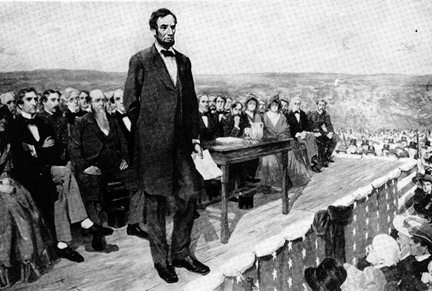
The power is borrowed to the US government with a four years lease by American people. In the Gettysburg address, Abraham Lincoln said "this government of the people, for the people, by the people should never perish from earth". Democracy in America mandates that the government is the servant of the people, not the other way round.

Freedom is not granted by ascription


Vast plain lands of China and India is the explanation of easy oppression of their governments over the common Chinese and Indians who inevitably become passive and the crawlers to the ruling class. The natural barriers of mountains, rivers and valleys of Europe explained the defensible and escapable competition of land owners' class with the rule of European kings. Aristocrats of Europe [7] were often admired as the powerful group competing with the European rulers. On the other hand, the Aristocratic class is the culprit of class struggles for Karl Marx when Europe became industrialized.

Yankees' experience of democracy in America has been pretty different from histories of Asia's superpowers and European nobles. Since the Declaration of Independence, with the affirmative statement of all men are created free and equal, the prosperity of the middle class has been guaranteed and their economic boom has been established. "Tyrannyàoppressionàthe pooràthe powerlessàmore tyranny" is acknowledged as a vicious cycle of the bottom billion of the world. "Less governmentà equal opportunityà economic freedomà rise of middle classà more economic powerà more opportunityà more freedomàmore competing powerà less governmentà secure more freedom" can be seen as the reinforcing defense mechanism of Democracy in America.

"Freedom is not ours by inheritance; it must be fought for and defended constantly by each generation, for it comes only once to a people. Those who have known freedom and then lost it never known it again", Americans heard from Ronald Regan in his first inaugural address as the governor of California in 1967. The responsibility of defense for freedom is assumed to be mainly taken by the non-homogenous American middle class people. The economic collapse of the middle class is the clue of the diminishing freedom. The encroachment of the government into the economic life of people is a confession of the failure and elimination of the middle class. The public welfare is either the insult or condescension to them. Welfare is not only seen as the disincentive for working but also deemed a form of robbery over the middle class.

American liberalism believes that contribution to society shall come from a person's willingness and willingness[8], not by enforcement. Capitalism is founded on trust and volunteerism, not on passion and collectivism.

Historical lessons from old men (1901-93)


The founding philosophy of America, the contexts of American tradition for its strong awareness for the need of defense for liberalism, and forefathers' shrewd old technique of factionalism as the key method letting people defensible against the Tyranny Machine, make any government extremely difficult to lay down progressive social policies.

Hilary Clinton confessed she had not realized the magnitude of the task she was undertaking. Since nobody is sovereign in America, the races are numerous, multi-pronged and uphill for ultimate acquisition of victory but most are ended with either mixed success or complete failure.

One hundred years ago, Theodore Roosevelt and other progressive leaders started to propose universal health care coverage. In 1935, FDR tried to complement Social Security with national health insurance but his plan was completely crushed under the opposition of AMA (American Medical Association) who feared that the government would control over medical doctors' practice. Truman also took up the cause of universal health care in his campaign for the 1948 election. He, too, was thwarted by well-financed and well-organized opposition from AMA and the US Chamber of Commerce.

It is interesting to notice that when people's power is very strong in North America, it becomes nothing in the bottom billion's countries even though big revolutions from the people sometimes happen. One simple explanation of this difference is that people in poverty are never organized so that they could be easily crushed by tyrannical regimes no matter how huge their armless revolution is.

Influenced by a Jainist master and his inclination toward a Buddhist thought of the love for the Truth (note this is with Big T), when Gandhi first applied a Buddhist's philosophy of Ahimsa, the non-violence principle for the struggle of the Indian Independence, he didn't think the principle could be powerful enough with the off-hand people of disarray. Rather he believed the non-violence principle could be extremely strong for British if it was practiced by a well-prepared group of some people[9]. Gandhi's philosophy was supportive along with the validation of the importance of Aristocrats in European evolution of democracy pointed out by Zakaria and the numerous victories from strength of the upper middle class group for wrestling against the growth of a big government in US. The success of the Czech velvet revolution that involved the majority of the middle class who had already prospered enough economically in European standard before the revolution also validate with this assumption.

After the defeat, Truman was content with his modest proposal of providing health insurance for recipients of Social Security which later would be known as Medicare. 1940-50s saw the bargains of labor unions for health care benefits of the workers in labor contracts. Other employers began offering benefits to non-union employees. This led US into the broad coverage of health insurance by employers. Currently 60 percent of Americans under age 65 receive insurance through their workplace[10].

During Eisenhower's administration of Republicans from 1953 to1961, two important movements in health care legislation were made. One was the Federal Employees Health Benefits Program and another was expansion and institutionalization of tax break for employer-based insurance. The first one that was based on open enrollment, was often seen as a model for future national health insurance[11]. Based on the average of the estimates from 2004-08, the second one costs the federal government more than $150 billion [12] every year. This amount of money was thought as the possible big source of revenue in the latest health care reform war.

With the publicity of the model proposed by Senator Jacob Javits [13], JFK was close to legislating Medicare in 1962. However, he was narrowly defeated by the Congress finally when one senator switched sides. In 1965, LBJ's initiative of Great Society created two federally funded health insurance programs, Medicaid for the poor and Medicare for the elderly. Johnson's effort was made possible by a huge Democratic majority in Congress. It was the greatest success in the American welfare reform so far and the most important victory of the progressive Democrats to be recognized.

In his 1974 State of the Union address, Nixon called for comprehensive health insurance. In February in the same year, he introduced the Comprehensive Health Insurance Act in which employers are required to pay for limited benefits of employees. The proposal failed because the influential policy champion, Ted Kennedy, rejected the universal coverage plan[14]. Later, Kennedy, who said health reform was the cause in his life, realized it was a major opportunity for the progress. Since that time, no proposal for universal coverage got a majority vote from a congressional committee until another twenty years later.

Ford from the Republican and Jimmy Carter from the Democrat also pursued reform in 1970s. During Carter's presidency, the Democrat Party was even split because of the clash between Ted and Jimmy over the matter of what should be done for health reform. The former, who had never given up his cause, pressed for national health insurance whereas, the latter couldn't be wed to national coverage.

Regan's presidency produced two additional benefits: one was the catastrophic coverage for Medicare and another was the prescription drug benefits. However, the introduction of new taxes swirled the revolt among many older Americans and Congress had to repeal the law early in the Presidency of George W Bush[15].

Over those decades, the health insurance industry had grown bigger and bigger and extremely powerful. Many insurance companies tried to block universal coverage lest their premiums would be set lower and their opportunism for risk selection would be eliminated.

As sharp as the serpents?


In 1993, Hilary Clinton was assigned the chair of President's Task Force on National Health Care Reform which organized the giant working group of 600 expert people for debating and reviewing specific parts of reform plan in detail.

The attempt to include as many viewpoints of people as possible turned out to be a disaster. The group was so large that many felt peripheral to the center of action. Many others were also interested in their own agenda, rather than collaborating with the overall plan. Some even stopped coming to the meeting. The First Lady was also sued by the health care industry, which used the federal law of the Federal Advisory Committee Act (FACA) that was designed to prevent private interests from surreptitiously influencing government decision making and usurping public's right to know[16].

The mistake of the First Lady was that she didn't invite the press to the task force's meetings. She finally won the case because the DC circuit ruled that the First Lady of the United States could be seen as a government officer so the procedural requirement of FACA could be waived.

Trapping the Godzilla in a spider's web


From the legislative point of view, the main difficulty for Hilary was unification of Democrats, who were too splintered in factions to ever become united. At that time, Democrats had only an insignificant 56 to 44 advantage over Republicans. She was not confident that she could muster sixty votes to overcome the filibuster, a tactic used by opponents to delay a legislative action.

Following the recommendation from House Majority Leader, Dick Gephardt, the First Lady tried a tactical maneuver that was to attach the health care bill to a budget bill called the Budget Reconciliation Act. The bill allowed the combination of an array of congressional tax and budget decisions into one single bill that could be approved by a simple majority vote in the Senate. If there was a 50-50 tie then the Vice President, Al Gore, could cast the tie break vote of the 51st.

However, trapping the health reform Godzilla into this spider's web of the budget reconciliation needed a waiver from the Byrd rule which was a procedural hurdle to ensure that items placed in the Budget Reconciliation Act were to pass the nation's budget. Despite the urge from many influential supporters including the President, Senator Byrd, who had served in the Senate for 34 years and was the Chairman of the Senate Appropriations Committee, objected on the procedural grounds that his rule could not be waived[17]. He asserted the fact that the Senate was allowed only twenty hours to debate reconciliation bills so that a health care reform package of such huge magnitude couldn't have enough time. The First Lady agreed with his experienced assessment and refocused on getting health care reform through normal legislative process.


Dragons all the way up


The task force was disbanded at the end of May, 1993. After the President's address to Congress on September 22, that described the outline plan of health form, Hilary worked arduously for testifying the bill in front of five congressional committees.

By that time, the pro-reform groups and anti-reform groups had started their respective campaigns to influence the outcome. Generally, consumers, workers, the elderly, pediatrics hospitals and pediatricians were on the proponents' side but the health insurance industry, pharmaceuticals and business groups were on the opponents' side. The employers' mandate to provide the health insurance to all employees was the key threat of the bill upon business groups, especially small business owners.

The opponents spent an estimate of $300 million for campaigning against the reform. The Harry and Louis television ads paid by the Health Insurance association of America[18] contributed a large blow to Hilary, leading to unpopularity of the bill among the public. The presentation of the ads subtly highlighted anti-liberalism values of the bill: a middle class couple was forced by the government bureaucrats to sign up for a new health care plan. The essential message to Americans from the ads was "No choice, Big government, Bureaucracy" that were going to replace Free to choose, minimal government, liberty.

There was also misinformation and uncertainty of information to the pro-reform groups, who supported the bill based on the hope of their groups' interest, such as the prescription drug coverage wanted by senior citizens' group. Hilary tried to keep pro-reform forces together under the umbrella of the Health Care Reform Project which raised $ 15 million for running the public information campaign. However, the well-financed and well-organized opposition groups have already gained the initiative enough for her defeat.

A dog walking on her hind legs


After Eleanor Roosevelt, Hilary' work on trying to make a significant social change was one of the most significant landmarks of the achievements of women in American history.

In the testimonies, the Congress members were impressed by her knowledge in intricacies of health system. Nevertheless, this might be the same possible problem with her defeat by Obama in the Democratic primaries. America has been a male-biased society so far. Hilary said the surprise and lauds from Congress members were in some part, the talking dog syndrome. The British writer, Samuel Johnson, once saw a woman preach on the road. He said, "Sir, a woman preaching is like a dog's walking on its hind legs. It is not done well; but you are surprised to find it done at all".

Even though, the male-dominated Congress members had such attitude to the First Lady's work, there were many among them who even didn't even know the difference between Medicare and Medicaid. Newt Gingrich, who led the Republican sweep in the mid-term election, talked in a TV interview that he didn't have the government health insurance and purchased a local plan from the Blue Cross- Blue Shield while the actuality was the Federal government provided 75% his health insurance policy under the Federal Employees Health Benefits Plan[19].

Just a pound of flesh is enough!


A famous motto of Jimmy Carter was "Democrats legislate, Republicans investigate".

According to Democrats, Republicans always block Democrats' legislature for public welfare lest such legislative success would lead to a Democrat President's victories in the coming election. Republicans are supposed to crush Democrats one way or another but their main claim was with a different reason: to stop the socialist machine of the Left that is against the American values.

For the opposition, Hilary was too strong in the process. Republicans were going to come after her and take a pound of flesh out of her one way or another. When Senate Majority Leader, George Mitchell introduced the measure for the Health Security Act, it was 1,342 pages long[20], approximately six pounds in weight. This was a great opportunity for Republicans to be able to take a pound of flesh out of the Lady.

For Hilary, she needed to include details of the Act because the supporters wanted their demands to be already guaranteed in the bill rather than deferred negotiations after legislation. For the public's common sense opinion, it was the obvious clue of the growth of the Big Government and bureaucracy. The message from Harry and Louis had also already been implanted in their conscious mind. The people presided as the duke and Republicans' Shylock could now take the flesh from Lady Antonio with reference to this lengthy contract. Simple and clear-cut categorization is always liked by the people.

In 2010, Newt Gingrich used the same major strategy by pointing the length of 2,409 pages and the count of the appearances of the word " shall" for 4,231 times, giving people the impression on Obama's health care bill as a detraction.

Totalitarian Couple and the media Titan


At the same time, the Whitewater investigation also diminished both Hilary and Bill's credibility. The media controlled by Conservatives spread the news that the President was a communist and his wife a murderess.

The radio waves continuously announced that this totalitarian couple would take the guns from the people and force them into their socialist health system. Newt Gingrich publicized the same kind of news against Obama's health plan but this time he was quite distracted by more serious challenge from the corruption of UN and its either prostration or collusion with terrorists' regime that he saw as a more distressing problem than the secular socialist antigun machine of the Left.

In the summer of 1994, Hilary made a nationwide tour, intending that she could spread the health care plan at the grass roots level. Along her way, local and national radio hosts had been inciting protesters. She was faced with protesters who outnumbered the meeting attendants coming to her meetings. The warning from the Secret Service made her wear a bullet proof vest. During one trip, protesters swarmed along her limousine and screamed at her. Several arrests were made and two guns and a knife were confiscated from the crowd.

Protesters were openly sponsored by a political interest group called CSE (Citizens for a Sound Economy) which was in close connection with Newt Gingrich's office in Washington. Richard Mellon Scaife, the right-wing billionaire and news publisher, who was the funder for the Arkansas project for investigating the case of Bill Clinton's sexual scandal with Paula Jones', was the generous sponsor behind the group. Later, Scaife moved to a position opinion on Bill Clinton for his post-Presidency work for global help and endorsed the Presidency of Hilary in 2008.

My husband is not a boxer!


In Congress, Republican Senator John Chafee of Rhode Island tried to help with Hilary in saving the reform by garnering the bipartisan support of his Republican colleagues but ended in vain. At that point, Bill Clinton dared not come forward to fight that he might think a big risk for his next term presidency and his Democrat party.

Hilary thought the President should at least have the courage to play the game; not concerning the probability of high loss since the probability of a win from no play at all was zero. She thought after the bill could be pulled out from the Finance Committee, Majority Leader Mitchell could bring it to floor and probably the challenge of filibuster from the Republican could be pushed out with serious play.

Nevertheless, the condition was already hopeless. In August 1994, Mitchell introduced the amendments that would have delayed requirements of employers until 2002, and exempted small businesses. Even with Mitchell's revised bill, there were not enough Democratic senators to support it. The measure never came to a vote on the floor of either the House or the Senate. In 1994 mid-term elections, the Republican revolution, led by Newt Gingrich, gave the GOP (Grand Old Party) control of both the House of Representatives and the Senate for the first time since the 83rd Congress of 1953–1954. With the control of both chambers by Regan's Republicans, the progress for Clinton's health plan became completely hopeless.

Hilary thought the underestimation of the opposite forces was their biggest mistake. However, she rather thought the President's cowardice in forfeit of the game left no chance for the survival of the plan. For the journalists, the key factor was the secret meetings of the Task Force that made the very bad first impression of her health care reform.

I somehow was tended to agree with the journalists based on my knowledge in selling strategies. For a sale representative, the first impression on him by the customer is usually the most important in selling a new product. Once the first impression is gone, it is very difficult to save yourself in next attempts. Notwithstanding, Hilary practically learned how powerful is the device mechanism of factionalism innovated by forefathers of America.

The second point of Hilary's health plan debacle, that is Bill's cowardice, was the most important of all that Obama took this lesson either coincidentally by circumstances or intentionally to play one more time for a win. The key factor that judges the ultimate success of this century-long process of health reform is too simple to be believed. The President has to fight even if he loses all and everything. Without attack, no game could be won just by playing for defense. In fact, this game theory is the simplest and most fundament philosophy of the triumph of capitalism.

They kindled fire on the table again


After Hilary's debacle, the momentum for the reform of the Left had come to a stop. In fact, the right-wing Republicans, who, by their natural duty of opposition, turned the table had many agreements with Clinton's administration in that the current system had a lot more to be improved[21].

In 2003, George W Bush put his name in history with FDR by signing the prescription drug benefit, commonly known as Medicare Part D that was the biggest expansion of Medicare since its establishment. In 2008, Democrats kindled their languished fire on the table again in their Presidential campaigns. Obama, Hilary and Edwards all proposed plans for comprehensive coverage.

In the Democratic primaries, Hilary seemed to triumph over Obama in her intricacies of knowledge of health reform, for which Obama looked quite inept. Such a brilliant guy with mercurial oratory skills obviously was so lackluster in this subject and people started to suspect he was the first-tier candidate. Obama realized that he was going to be whiffed up if he didn't have a definite agenda for the all-time mantra of the liberal constituencies, "Health care for all".

Don't do like what the couple had done


There was a single biblical principle for Obama's team for health care reform, "Don't repeat the mistakes of Clintons". The most important strategic rule was "Get initiative by disarming your enemies first". Otherwise they would have taken the blood out of you. Here, the enemies were special interests, the harassing Sky Captain creatures continuously released by already dead James Madison from 1787.

The priority also was shifted from the uninsured, for whose interest theoretically weak Hilary Clinton had focused, to the middle class who were now asked to give hands to the government to defeat the corporate world. In the Chinese Tai Chi principle, if you face two enemies, maneuver to divert their attacking forces on you in the direction that they cancel each other.

In 2009, Obama's team welcomed a White House forum of the collection of 150 men from most powerful interest groups, many of whom were reputable combatants for crushing Hilary's care: Republican lawmakers, leaders of organized labor and AMA, corporate executives, consumer advocates and officials from the US chamber of Commerce, Lobbyist, Tauzin of PhRma, Ignagni of American Health Insurance Plan, and Chip Kahn, the mastermind of Harry and Louise.

The main tactical purpose of the forum was to divide the resistant forces and conquer. The divide is a fundamental totalitarian regime technique, "let the dog always feel uncertain that he will get the bone among others". With the back channel messages, in these closed door meetings the administration pressed the groups with part enticement and part threat. If you are not at the table, you will be in the menu. The business world got to believe that if they didn't get a compromise, the President was ready to put them as the villain in his drama.

On June 19, five pharmaceutical companies signed off an agreement with Obama's administration for lowering their drug prices for seniors to help the government in its covering of the infamous donut hole of Medicare Part D[22]. After the surrender from pharmaceuticals, conformity followed. Hospitals came to agree to forgo $155 billion in government reimbursement over 10 years. Other heavyweights such as Wal-Mart, nurses and some physicians began to speak in favor of the President's initiative.

You have no superior reason to quarrel with God


When the Tsun Zu's The art of war worked well for conquering the corporate and big citizens, the play needed different resources in unifying seldom united Democrats and forever united Republicans in the Congress. Another powerful group that couldn't coerced by denunciation as the enemy of the state was the very strong Catholic Group. Only you should be cautious that you would become the enemy of the Kingdom of Heavens overnight, and you also have no superior reason for your apology once you started to quarrel with the God.

When Obama's bulwark, Ted Kennedy passed away on August 25, the Bishops saw this as an opportunity to press Obama, whom they thought not as a strong, staunchly man like Ted, on their pro-anti-abortion issue. Cardinal Sena O' Malley, the archbishop of Boston, attended the funeral to pray for Ted despite the protests for the ex-senator's pro-abortion stand and gave Obama the message that the Catholic Group was willing to support the health care reform if no public fund was used for the abortion cause.

With the executive order issued on March 10, Obama declared that no federal funding be used for abortion[23]. Along with this message, not only he showed his supportive savvy of the contentious issue of the Catholic but he also allured the anti-abortion Democrats to vote for the bill, securing its passage.

O' BrienCare is not sweet


While Senator Baucus theatrically hinted that their attempt was close to garnering the bipartisan support, intra-party disputes were heating up since August. Obama's rambling performance in this prime-time news conference aggravated the concern of the public.

Conservative talk show hosts and tea party activists organized protests, calling "Obamacare". Paying for the end-of-life counseling became death panels in the words of criticism. The public turned to think O Brien's offer of the honey was in reality bitterly sour. Tea partiers conjured up the encroaching big government, protesting to test the strength of Obama's administration.


Obama-Reid-Pelosi machine


Human history has been six thousand years long so far; however, in many instances, the most important moments of great change come out from a few seconds of Blink[24]. Reid was one of the marvelous examples of those few seconds.

When Democrats were extremely angry at filibuster of their old betrayer Lieberman, running mate of Al Gore in 2000, Reid reminded of the landmarks of the old senator's help with major legislative successes of Democrats. These blink of reflection, the positive mental attitude, a business and life strategy to win somebody and one's own heart, compassion out of anger, softened the attitude of this Old One Man on the way. Many closed door negotiations that once was the modus operandi for the start of fall of Clinton's plan were successfully finished to secure the final sixty votes to overcome the filibuster.

On the other hand, even though numerous people and groups were involved in history, the change of history was most often decided by the merit and choice of a handful of people. In Hilary's case, Mitchell just threw in the towel and Bill Clinton just passively accepted the defeat of his wife and Magaziner on the rap. Nobody bothered to push the President to the frontiers of the battles, when they were going to lose.

When Abraham Lincoln first met with Harriet Beecher Stowe of Uncle Tom's Cabin, he said to her, "You are this small woman who started the civil war"[25]. The instrumental role of the first Madam Speaker of the United States was more than this. Not only, she was able to deliver to 219 votes in the House, she was the key pusher to move Obama to war frontiers to fight when Rep. Scott Brown captured Massachusetts Senate seat held for more than forty years by the late Ted.

For Newt Gingrich, the victory of Brown is the start of the return of Republican titans to sweep Democrats from both chambers all the way out. But Obama-Pelosi-Reid machine ran faster otherwise history would be repeated.

Commander-in-Chief's fight


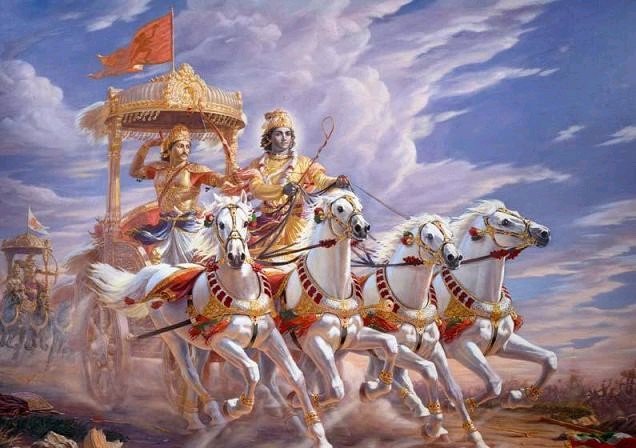
In a sacred Hindu doctrine called Bhagavad Gita, the essential message to Lord Krishna to the mankind was "If you were a soldier, you can't be equivocal. As a soldier, your duty is to fight. Truth is to be searched through the duty". Humanity is the duty for many heroic fights against the British for Independence struggles of India[26].

Obama's administration belatedly realized that the months of delay, closed door negotiations and special deals such as Louisiana Purchase, special concession of 300 million Medicaid to Nebraska in cornhusker kickout had already vitiated the credibility of the Washington's operation. In fact, Obama himself had already hung his own democrat generals with a false strategy in most part of the reform battle on account of Szun Tsu's The art of war, which ruled "don't release your generals into the battle field without the clear instructions from you or you". For one year, Reform Democrats were all the time leaderless and lackluster. When he was just trying to instruct behind the scenes, the public became more and more obfuscated at the plan

Democrats started to press back on their Commander-in-Chief to roll up his sleeves to take on the battle. Obama himself got into the battle and sought one battle after another to garner the bipartisan support but no single Republican hand was offered. However, his full engagement encouraged jittery Democrats and promised the fragmentized their unification. Pelosi was dealing with the specter of abortion funding, shuffling from one office to another office.

On March 23, 2010, President Obama of the United States signed the Patient Protection and Affordable Care Act. Hilary was right. If Bill had come into the battle field, it would have been done earlier. To be or not to be, the change of history is just a moment of blink to be fearless.

Conclusion


Skocpal's polity-centered approach suggested seeing the society as the hub of action. It recommends we should determine whether a particular policy ambition fits within broader policy contexts and how the history of past polices shaped the outcome of the current policy agenda. Four parameters are to be looked in the window the polity-centered approach: (1) the formation of a state and political parties (2) active social groups (civil societies) (3) how much is the degree of freedom of socially and politically active groups to different levels of access and their capability to orchestrate (4) the feedback cycle of policies.

It was evident that both Clinton and Obama's health reform plans were at the first place, to be determined whether they could stand up with the founding philosophies of the United States. Even though liberalism is redefined progressively towards the Left in United States since either the FDR's New Deal of Great Depression or it was a struggle of finesse between Hamiltonian nationalism and Jeffersonian democracy or the discordance between LBJ's Great Society and Ronald Regan's Problem Government, the primary American values of free market, freedom to choose, individualism, factionalism, "nobody is sovereign" and the Laws of Constitution have always been respected.

For me as an Easterner's perspective, American values gave one essential message, "fight all the time but with conscience and tolerance". Duty, Conscience and tolerance are core spiritual values of the major Eastern ethical systems such as Confucianism, Hinduism and Buddhism.

The freedom of association and creation of interest groups has made all welfare reform movements difficult. To get a compromise needed hard work, tricks, bargain, incentives (somehow bribery) and sometimes requires O Brien's techniques of coercion and entice. Understanding of human psychology played a crucial role in this part. Colvin's Talent is overrated[27] highlighted that there is no business expertise prodigy in history unlike those common few in sports, because making a successful deal requires understanding and correct assessment of stakeholders' human nature and their position and such experience cannot be achieved by a legendary 15 years old genius. The winning strategies in both opposition and pro-reformers conclusively have depended on who can play better for human psyche. In the first war of Clintons, the industry who took the initiative won. In the return match, the Obama Administration took the initiative and maneuvered with Hobbes' dilemma of human mentality for tendency of the choice for the minimal worst under the situation of coercion. Time is noticed to be the fourth dimension in every competitive sport to influence the outcome, as well as in the health reform race.

Coalition of groups to bigger counter forces played a major role. However, from Obama's administration experience with business industry which Hilary had not tried it, it is also noticeable that if you could make someone surrender first, others are tempting to do the same. Maybe the Domino theory of LBJ, that justified the America's war against Vietnam, could agree with, or the conformity theory of human psychology.

Arendt described in her Origins of totalitarianism[28], it is not because the mass are passive to the totalitarianism but the truth is they are happy to stand on the bad side and combine with bad people. They think their living is guaranteed and comfortable by associating with the oppressor group.

Rationalists explained that human rationality means getting things with easy, cheap and a minimal worst way. Coalition can be more counterfactual than we normally are optimistic. The paradox is not an uncommon experience in many tyrannical countries of the world as stated in Collier's Bottom billion. When the minority rises up with the arms to revolt, these rebel arm holders usually end up in coalescing with their oppressor government to share the privileges[29] in oppressing the people together. Tyranny is always a vicious cycle and the concern of the Right-wing conservatives for stopping the growth of a big government might probably be well-justified.

As a general rule, the last parameter of the polity-centered approach that describes that the past policies shape the outcome of the new agenda may be true. However, it is worth considering that human capital factors might play a more crucial role in determining the outcome. In reality, Obama's administration had fallen in the same lobster pot as Clintons did but stronger human factors finally changed the outcome.

All rules are only relatively true. We see A causes B, but if there is either no real A or no real B, our world may be just an event of randomness with uncertainty.


1. Levin, M., Liberty and Tyranny. Threshold Editions, New York, 2008.

2. Orth, J., Exporting the Rule of Law. NCJ Int'l L. & Com. Reg., 1998. 24: p. 71.

3. Jarvie, I. and S. Pralong, Popper's Open society after fifty years: the continuing relevance of Karl Popper. 1999: Routledge.

4. Taleb, N., The black swan. 2008: Random House, Inc.

5. Madison, J., Federalist 10. The Federalist Papers, 1787: p. 77–84.

6. Hayek, F., The road to serfdom. 2001: Routledge.

7. Zakaria, F., The future of freedom: Illiberal democracy at home and abroad. 2004: WW Norton & Company.

8. Rawls, J., A theory of justice. 1999: Belknap Press.

9. Dhawan, D., The Political Philosophy ofMahatma Gandhi. 2006: Hesperides Press.

10. Post, T.S.o.t.W., LANDMARK. 2010.

11. Anderson, O. and J. May, The Federal Employees Health Benefits Program, 1961-68: A Model for National Health Insurance? Perspectives, 1971.

12. Burman, L., Is the Tax Expenditure Concept Still Relevant? National Tax Journal, 2003. 56(3): p. 613-628.

13. Era, P., Medicare and Medicaid: The Past as Prologue.

14. Johnson, J., Nixon Confronts the Welfare State.

15. Himelfarb, R. and R. Perotti, Principle over politics?: the domestic policy of the George HW Bush presidency. 2004: Praeger Publishers.

16. Wasserman, C., Firing the First Lady: The Role and Accountability of the Presidential Spouse. Vand. L. Rev., 1995. 48: p. 1215.

17. Starr, P., The Hillarycare Mythology. American Prospect, 2007. 18(10): p. 12.

18. West, D., D. Heith, and C. Goodwin, Harry and Louise go to Washington: Political advertising and health care reform. Journal of Health Politics, Policy and Law, 1996. 21(1): p. 35.

19. Clinton, H., Living history. 2003: Simon and Schuster.

20. Dorfman, L., et al., Local television news coverage of President Clinton's introduction of the Health Security Act. JAMA, 1996. 275(15): p. 1201.

21. Clinton, B., My life. 2005: Vintage.

22. Cevallos, M., Many seniors on Medicare to get checks for prescription drugs. STLtoday, June 09, 2010, 2010.

23. Adams, C., President Obama issues executive order on abortion to ensure votes for health care bill The US Headlines Examiner, Mar 10, 2010, 2010.

24. Gladwell, M., The Power of Thinking Without Thinking. New York: Little, Brown, 2005.

25. Carnegie, D., Lincoln, the unknown. 1932: The Century Co.

26. Minor, R., Modern Indian interpreters of the Bhagavadgita. 1986: State Univ of New York Pr.

27. Colvin, G., Talent is overrated. Fortune (Switzerland): p. 68.

28. Arendt, H., The origins of totalitarianism. 1973: Mariner Books.

29. Collier, P., The bottom billion: Why the poorest countries are failing and what can be done about it. Bull World Health Organ, 2007. 85(11).


Wednesday, March 31, 2010

Why your country has two names? III


In 2005, I earned an opportunity to take one semester course of political sciences in MIT. The following original mid-term paper fed with comments from the instructor (who is regarded as a genius by his American peers), could be read as a companion to The apology of Burmakin VII.

Western anthropologists who try to connect the Burmese Buddhist culture with the totalitarian rule of the country, are usually perplexed at why a country with the highest democratic values (as a matter of fact, they are also Buddhist values) such as egalitarianism, absence of either a discriminative caste system or racism, freedom of women, elastic social system and especially, individualism, have come to be subjugated to the longest military dictatorship in the world history with collective neurosis and medieval violence from both sides alike, its despotic regime and their oppressed people. Burma is a land of contradictions with its people overwhelmed by split personality, the inborn merit of Buddhism in one half and the acquired infested irrational brutal mentality deliberately created by its cultural system ruled by its unjust, arrogant rulers greatly aided by mystification of spoilt Buddhist priests in the other half.

When I began to point out the lack of critical thinking in our Burmese educational and social system, one of my friends, who was a well-learned writer living in Burma was shocked. "It is a shame Burmese literature have not a single book written on this subject", was his blurted murmur in frustration. This is the main reason why we Burmese think ignorance as strength, slavery as freedom and militarism as peace and always come under passiveness and impotency in our liberation from humiliated poverty. This is the armor of the tyrants that makes their depraved unfairness and imbecile indiscernible to us as we also come to tie together to be depraved and neurotic ourselves.

The stressed words in above passages, deliberately and humiliated are important in understanding the real nature of Burma and this paper. George Orwell once wrote, perhaps based on his five years experience of living in British Burma, "It is a world in which every word and thought is censored. Free speech in unthinkable. All other kinds of freedom are permitted. You are free to be a drunkard, coward, backbiter, a fornicator, but you are not free to think for yourself". It is not dangerous if somebody can realize his intoxication, trifling, meekness, libel, and immodesty of his desires. In fact, what got Siddhartha to wake up as Buddha was his strong discovery of evil in him the craving. The realization of the recurrent vicious mistakes in his raison d'etre for this carpenter of life homes made Siddhartha free from the slavery of all kinds of evils and emerged from his aged sloppiness as Buddha, the waken up One. Indeed, critical thinking is the legacy of our Teacher whereas, moral relativism, "the good will decides the real fate", deeply rooted in our Burmese culture and propagandized by unwise priests, was the irrational revolt against Buddhism. This distorted message of Buddhism was also the ruling unconscionable philosophy of the constitution justified by unscrupulous Burmese military despots. This unrestrained Burmese irrational character, perhaps the worst misunderstanding of Buddha's teaching, is also our irreversible road to poverty and slavery despite of luckiest merits of highest democratic values from our Buddhist legacy.

Question of the mid-term assignment

3. Select a policy in a country other than the United States with which you are familiar. Demonstrate how this country's political philosophy or institutional arrangements shape and influence policy structure and implementation- applying an analytical framework to those questions analogous to that used in the class.

The state's support of the Buddhist religion in Burma

A few years before he was arrested, the ousted Burmese Prime Minister, General Khin Nyunt, initiated a huge project for rebuilding of the Shwe Dagon Pagoda, the most sacred religious site in Burma. The government of Burma pledged their commitment and made a clarion call to the general public to help with their religious project. The rich and the poor alike, who indeed bred the same antipathy towards the unrestrained tyranny of the military regime, willingly donated large sums of money to this government led project.

Millions of dollars were spent in this effort but there were not so many people who felt that a secular government had no right to exercise its state power for the support of any particular religion. The general public opinion for the implementation of this Buddhist policy was that the people triumphed together with the government for a justified cause and highly moral reason. For a while, people forgot that this government they stood together in this project was an illegitimate de facto regime. Even the members of the elected party of the opposition, NLD (National League for Democracy) forgot their long-lasting smothering conflict with those tricky tyrants. Burma has been free from any dissent, disharmony and frustration for a moment with her people bonded with same federalist mentality in their coming together at deep spiritual level. The accomplishment of this rebuilding project of the Shwe Dagon Pagoda became a national triumph for the government, as well as for the opposition, and for the people.

In fact, when they overthrew the democratic civilian government in 1962, one of the critical claims from the military leaders who called themselves as revolutionaries, was that they revolted against the religious tyranny of their antecedent government, who had declared Buddhism as the state religion as the overthrown government had promised to people in their election campaign. The Revolutionary Council who crowned themselves as the saviors of the union, declared Burma as a secular state after their military coup. The irony was that the government's religious policy have been always in favor of Buddhism and the oppressed and the privileged alike came to help with the military whenever they pointed out some exquisite cause in the crusade Very interesting- given this strong commitment to Buddhism from so many what is the source of even a pro forma assertion of the state being purely "secular" of Buddhism.

Burma has never experienced a country of religious freedom in terms of Jeffersonian philosophy of freedom of mind. Perhaps, the Burmese Buddhist monks are one of the most arrogant religious classes on earth since the state has already spoilt them and granted the full legitimacy for their religious aristocracy. In fact, Buddhism itself is the most down-trodden religion, suffering from the mental tyranny of its priests. The members of other religious kinds could interpret and print their cannons as far as their freedom of conscience in connect with God may allow them but there was no Burmese Buddhist who was allowed to express the Buddha's authentic original words of liberty and tyranny.

When this author wrote a small booklet of Buddha's essential quotes in 1984, the ministry of religious affairs enforced the publisher of the book to omit all the words of freedom that are around 40 to 50 in count in a single booklet. In fact, the book was sponsored by a Bhutan Buddhist foundation and the president of the sponsor foundation steadfastly tried to bribe the officials of the ministry to preserve the sentences as original as this author had written. After persistent continuous struggles for more than one year, the ministry allowed the original sentences but this time they did mandate that we must drop off one word from the original writing. The single word to be dropped is tyranny. So the gov't wants to use Buddhism for support their rule- then why claim to be secular?

History never furnishes an example of a priest-ridden people holding a free civil government. The writer of the Virginia Statute of religious freedom believed nation building should be based on the separation of the church and the state. Liberty is not only the freedom from the physical tyranny of the government and but it also is the freedom of God-gifted human mind from the mental tyranny of the priests. Jefferson thought the ongoing fight of our people for liberty essentially involves rationalization of human mind to curb contamination from priests' irrational mystification. But, while the US is very committed to separation of church and state the UK has an established church and a democratic government.

Consistent with Jefferson's thought, Burma was a perfect example of the priests contributing their mental tyranny to enormously help with the physical tyranny of an undemocratic regime. However, Mr. Jefferson should be surprised at why Burmese were able to feel only the physical tyranny of more rational gun-men but they never felt mental tyranny of mystical saffron-robed guys and even soberly adored them. This is a good question that might help understand Burma As Helena said in A mid summer night's dream, "The more you beat me, the more I try to win your heart. Neglect me, lose me; I only ask you to treat me like your dog and let me follow you".

In effect, the mind of Burmese is enslaved by irrational priest craft as a priest-ridden country. Civic freedom is always a mid summer dream. However, the opposite is true and this is the case why Burmese, as seen from the angle of a naked man in nature as American founding fathers based their hypothesis of social contract, was happy to follow with Buddhism even if its corrupted tyrants mercilessly beat them. The missing piece from Mr. Jefferson's story, that Jefferson himself might not have expected but was sure to be glad to find it as his taste as a deist, is that the essential philosophy of Buddhism was based on the essential principles of liberty and equality of mankind. It may be the power of an absurd double think that a reader may forget everything from this essay. The political philosophy of Burmese, which was based on the spiritual philosophy of Buddhism, provided their mind to love liberty and equality more than any Asian national. Paradoxically it legitimized the triumph of different manifestations of tyranny to be agreeable and to live passively with it. A raven or a dove, a lover or a tyrant? This is not a dilemma but equally true flipsides of a coin for the Burmese bottom. The story of a tyrant is what began. interesting

A thousand years ago, the first Burmese empire of this largest nation with the wealthiest resources in South East Asia was built by a Tibeto-Burman king, Anawratha by crushing his rival feuds in this region. Before the reign of Anawratha, this region which was more or less sub-Indian in culture seemed to be mostly influenced by Mahayanist Sect of Northern Buddhism. Nobody exactly knows what sect of Mahayanist had been prevailing in this region; however, it was evident that the military government of Anawratha had strong hostility against the Mahayanist priests' influence over the state. Most probably, the pre-Anawratha age might be a bit similar to Samurais' age of Japan where Buddhist priests were mostly overwhelming in feudal lands of society. The crush upon the priests might be a similar stereotype with the rising modern Japanese government in dethroning the Samurai priests in their cause for building a modern nation. One record showed that 60,000 Buddhist priests were cruelly assassinated during this revolutionary time. What was the difference between the Eastern revolutionaries and the founding fathers of America? It was prudence with what founding fathers act for social revolution but the eastern despots didn't. The strength of the right judgment earned from critical rational thinking was seriously weak in these motivated and arrogant men of the East. They might prepare twenty four hours a day for their massive deployment skills of war but no Eastern heroic soul has ever imagined learning fifteen hours a day like Mr. Jefferson just for improvement of the spiritual knowledge.

Anawratha tried to vindicate his atrocious act by pointing the example of a pro-Buddhist king, Utayna' s prosecution of anti Buddhist priests in Buddha's enlightenment era, even citing that he was following the merit of Asoka, the greatest Indian Buddhist emperor , who fanned out Buddhism in many parts of the world. What he might never have noticed was that the Buddhist principle steadfastly upheld by King Asoka was religious tolerance with all kinds of religions. He seemed to be even more fearful of the tyranny of priests than Mr. Jefferson did but seemed to be smarter than Mr. Jefferson in not making frank opposition with all kinds of prevailing religions of his consolidated nation. After crushing a single so-called wrong Buddhism, he stopped. His triumph over the Southern part of Burma took a perfect opportunity by taking another sect of Buddhism as a national religion, namely Theravada that means the teaching of the elders. This time, Anawratha could safely claim his cause in assassination of numerous Buddhist priests, their followers and rebels because he could now be viewed as a person of merit born to serve the originality of Buddhism preserved by the Heavenly Elders. His arrogance and war could then be justified with a crusader's cause .Interesting- transforming a political persecution into a religious crusade- this was pretty common in Europe in the age of the "Wars of Religion" Maybe Anawratha's mind was calming down by finding his excludability as the search for the rational unity of mankind from Buddhism. In the post-bellum time, he built numerous dams for poor farmers saying "With my right hand, I will give you crops of paddy; with my left hand, I will wipe out tears from your eyes". Feudalism had been ended. The absolutism and state paternalism of the welfare for all emerged, but with a significant exception from the European countries. With the merit of Theravada tradition in Burmese history, there has been no claim of some animals that they are more equal than others.

The ruling passion of Anawratha, that most likely was his self-fulfilling prophecy of a tyrant, in his cause for the reign of Theravada for the rational harmony of mankind has been carried forward as the great spirit of the majority of Burmese. It is more or less similar to Hegelian philosophy of human evolution moving toward the greatest rational spirit, an illusion of empiricists as the critical realist Karl Popper rejected as irrationality. Nevertheless, the Burmese Great Spirit started from King Anawratha has been always a useful propaganda machine of numerous military tyrants to put people in collectivism in their hefty missionary history that they could never succeed so. The paradox is odd enough. Even if they uphold such kind of highest racial attitude, Burmese have no tradition of discriminating a person on their race and religious ground. Racism is regarded as the greatest problem to liberty struggles in America; religionism was also the problem of clashes of Christian sects during founding fathers' time. Those problems can never sow a seed in the rational mind of a Burmese Buddhist who identifies his ID with a Burmese Buddhist superego. This entails the country never have its social problems for its different religions and the vast diversity of races. Are there significant numbers of non-Buddhists in Burma? I know that there are number of non-Burmese, in the north. Is their discrimination or tensions around this? However, the institutional arrangements did as if these are the overwhelming problems in Burma. These institutional arrangements did exert their tyranny over all non-discriminatingly including Burmese Buddhists, perhaps the most suffering majority who suffered the most serious oppression.

Hayek in his boring and unsuccessful but very brilliant The Constitution of Liberty indicated a serious problem arisen from the sense of inner liberty. Stephen Covey in his best seller Seven habits of highly effective people ,a pro-inner liberty book arguing that even a Nazi prisoner who didn't know which day he would be prosecuted had complete happiness if he could be assured himself that nobody had the power to control his mind imagining as a bird for flying in the sky. This is the same problem of the Burmese liberty. When the essentials of Buddhism boldly asserted freedom as the inalienable promise of all human beings, Burmese never see freedom as the outside freedom contrary to the fact that Buddha was thinking freedom from both sides. Is this an argument that suggests that the spirituality of the Burmese makes them more willingness to accept worldly oppression? How far would you go on this? However, from the merit of Buddha's eminent struggle against the danger of discrimination of the impending caste system in India, Burmese benefited the complete denial of any ascriptive status in their tradition. See the question above India during the Buddha's enlightenment era was more or less a metaphor of the priest-ridden country exactly as Jefferson's thought experiment imagined. The priests had started to claim themselves as the representatives of the Brahmin (the same concept as Creator) since they were born from the God's head. All others else were born from the mouth, arms or feet, relatively unimportant parts of the Brahmin body so that all others else were lower and only the Brahmin class, the priest class was superior. This was the start of the journey of the corrupted Hinduism that Buddha seriously took his challenge. In his famous Vasettha Suttra, Buddha declared his philosophy by saying:

"Vasettha,

He who makes his living by serving his master(s) is a slave, not a Brahmin.

He who makes his living by stealing or robbing is a thief, not a Brahmin.

He who makes his living by holding the weapons is a soldier, not a Brahmin.

He who makes his living by governing the wealth and resources of the soil is a king, not a Brahmin.

He who makes his living by priestly craft is a ritualist, not a Brahmin.

Just by his ascriptive status of either heredity or inheritance, I don't call he is a Brahmin. Yet, he is still flinched from the dart of fear and is merely a coward.

He who doesn't have fear, who doesn't have a seizing (free from dogmatism, violence, arrogance), I call him a Brahmin".

No spiritual advantage could be claimed by just any ascriptive status: this is the foundation of Buddha's philosophy in his humanism philanthropy. In fact, in this cannon text, Buddha started his argument with the same Thomas Jefferson's statement but slightly different and more Darwinian words, "all men were born equal". "Vasettha, only animals, reptiles and fishes are different from each other. The genetic transcription matters in invertebrates and still evolving mammals because they rely on their difference in genetic transcription for survival advantage. For human, their genetic transcription has no difference and it doesn't matter for human survival. Unlike animals, human survival and liberty is based on reason. I assure you that there is no difference in all humans (crushing Brahmin priest's claim that they are different) and all humans are born equal with the same set of codons in their genetic code for their road to liberty".

This non-ascriptive equalness was benevolently brought to the Burmese tradition. The complete denial of ascriptive status was reflected in Burmese names which don't have a surname as the surname that is the indicator of heredity is not regarded as important. Very interesting- in the west surname may have grown around property and its transmission Burmese don't know who their grand-grand fathers were as they don't think it makes sense to remember them. As if the class has no meaning to Americans, the class struggle of communism is no sense for Burmese Buddhists as Buddhism already affirmed them that there is no difference of humans so there is no class. A bit of a jump- can't people have differences that are related to the means of production. Renters verse owners of farm land for example? Communism could never be a concern for this country even if the military government holds that they are the great fighters against communists and sometimes tend to say communism is a threat to the nation. They just say only sometimes for the defense of their legitimacy as federalists since they understand well that it doesn't make any sense for them and all others else for this country. No communist book was read by the population because the core terms are all meaningless such as "class clashes" and "proletariats' revolution". If there is no class, how come a class clash happens? If you never feel yourself as a bottom proletariat (as you are the same equal with anybody else in your liberty), how can a proletariat's revolution can happen? Even the most ardent communists who were driven away into the jungle by the current military regime didn't' understand for what they have been fighting for and what revolution is taking place.

The main argument of this essay was there was no connection of the political philosophy of Burmese society that was essentially based on Buddhism with its deliberate institutional arrangements. As mostly noticed, Burmese were driven out of any kind of external liberty but interestingly, the little known fact is that their inner liberty could enjoy happier than any miserably struggling creature for liberty on earth. The institutional arrangements of Burma are the products of the natural history of tyranny as tyranny always tries to overprotect itself and is ravenous in consolidating more and more power, so it corrupts more and more to be deviated from the Buddhist natural path of modesty and equality. For traditional Buddhism, the Buddhist church and the state were completely separated. Even when Buddha didn't deny accepting donations from the kings, he prescribed the rule that every monk has to walk from house to house for asking for the food, an evident counter defense mechanism to protect his monks to live with the public rather than the contamination from the state. This was a very important testament in Theravada tradition and in fact, it was also human laziness of monks to free-ride with the state so that they submit to become the compatriot tyrants. Almost all monks know they violate the rule by not begging food from the public but the circumstances made the modern monks violate Buddha's bureaucracy and act as they wish themselves to be.

The reason why people are always collaborating with the government for an eminent Buddhist cause was because Buddhism was the greatest symbol of their human honor for liberty. Good, back to the core question As a systemically created closed society, even though they do never experience the practical external liberty, their conscience and imagination for ultimate liberty can overtake any kind of unfinished liberty portrait on earth. The upholding of highest racial attitude was a super ego defense mechanism especially when every resource and opportunity for their external liberty is prohibited by the tyrants for many ages. The lack of education based on critical thinking is also a plus with this problem. All over and above, the state also helps with this kind of thinking as psychological solace of the oppressed and its probable help for collectivism. In fact, collectivism is almost an unpractical aim for the military for decades no matter they have tried hard in many ways to make it succeed. The reason again is Buddhism which is essentially individualistic and no submissiveness of a group's act. Ok Overly individualistic, moral relativism is another kind of problem overwhelming in Burma, that is restrained by the Buddhist teaching of Dharma which stresses the importance of prudence and overrule of not violating negative rights over the fulfilling and the claim of the entitlement for positive rights. Literally, Burma seems to be paradoxically more peaceful and more socially cohesive than any other authoritarian country for the inner liberty of Burmese has the same principles with the philosophy of founding fathers of America and recognition of the liberty of Americans, but with some more or less serious problems of irrational illusions from the lack of critical thinking based education. Without the development of a policy for implementation of critical thinking based education, as Jefferson imagined and also practically and disappointingly happened in Burma, mankind has to forever live under the mental tyranny of mystification from priests.

In brief, the Burmese approach to Buddhism is Washingtonian and as Washington could envision, they earn the moral merit with their favor to a particular religion, however, at the same time they suffer heavily the calculation from the Jeffersonian thought of the priest-ridden problems. An interesting question might be whether the Washingtonian approach can be hoped to be more successful by earning the merits and purge out its Jeffersonian demerits by adopting the Jeffersonian tool of critical thinking based public education. However, in principle, the Jeffersonian thought of the freedom of religion demands that any kind of church not depending on its merit or miracle needs to be separated from the state. As an ardent supporter to the abstract concept of the veil of ignorance rather than practical utilitarian methodology, I may prefer to the exclusive Jeffersonian approach rather than a Washingtonian method or mixed method even if these approaches have very high merits for the majority. Tyranny of the majority should always be the greatest concern for us.

A most interesting paper. Very educational. It might have been improved a bit if you had considered this intital issue more consistency and in depth- the support of the Temple crossing political lines while not erasing them.


Sunday, February 14, 2010

The apology of Burmakin VII


Vaasettha,

He who makes his living by serving his master(s) is a slave, not a Bhramin.

He who makes his living by stealing or robbing is a thief, not a Bhramin.

He who makes his living by holding the weapons is a soldier, not a Bhramin.

He who makes his living by governing the wealth and resources of the soil is a king, not a Bhramin.

He who makes his living by priestly craft is a ritualist, not a Bhramin.

Just by his ascriptive status of either heredity or inheritance, I don’t call he is a Bhramin. Yet, he is still flinched from the dart of fear and is merely a coward.

He who doesn’t have fear, who doesn’t have a seizing (free from dogmatism, violence, arrogance), I call him a Bhramin.

Burmakin: Your majesty, I could agree with you that there is no Burmese spirit or peacock spirit as such. Nevertheless, I have a question for you. The term Burmese might not be real or perhaps mere stupidity to incite arrogance. However, I think there is a merit to still maintain that I am a Buddhist. Buddhist is the character of wisdom, modesty and serenity. The latter is the opposite of the irrational grasp of the former vocabulary. A sort of rational grasp shouldn’t be permissible, your majesty?

King of Angels: This might be but most probably it might not be. My son, do you remember what Buddha’s answer is in his response to Vasettha‘s question, “what is prevailing in the world?”.

Burmakin: I remember. Our Teacher responded that “Name is prevailing in the world”. Am I correct?

King of Angels: Correct, my smart son. There comes another question to test your knowledge. Have you ever heard another teacher, Lao Tzu’s famous critical challenge about the name?

Burmakin: This is a child play for me, your majesty. The answer is also the core philosophy of Taoism that advocates withdrawing our life from any social institutional structure for realizing our ultimate liberty of mankind. Teacher Lao challenged that if an institution is named after a word, the name of this institution is true if and only if the institution could display the attributes and fulfill the functionality as the name indicates.

King of Angels: Correct, my well-learned son. For Lao Tzu, there is no social institution that could really act and fulfill the qualities as their name indicates. They are just the shams as in the case of your current Burmese government’s deceptive creative structures for their hierarchical slavery plan or endless struggle complexes for equity and efficiency as in the Western statecraft democracy. If you still live with a social institution, you are always living a virtual life and not able to realize your actual self of the nature. Human constructs will drive human farther and farther away from the real human nature.

But my point is not to instruct you to follow Teacher Lao’s conclusion of the need of withdrawal from the human constructs for closer living with nature. What I will highlight is the ignorance of your fellow Burmans in grasping the names as real.

Your human tendency is that before reality is able to be figured out, you grasp what you think as real. That is not a serious problem. Everybody has a lot of time for working hard for reality. The grave problem happens when you live forever at this deadlock point, just by grasping, and never try to be a Buddhist.

Burmakin: It is still difficult for me to grapple with your heavenly thought and finally agree with you, your majesty. For me, it might be simpler to think that a person who supports Buddhism is a Buddhist whereas a person who doesn’t support this religion is not. It might be a more usable definition for practical life, your majesty. Is this not that simple as such?

King of Angels: Hey my son, your evil military government members are donating heavy sums of money to your Buddhist monks the whole year round in Burma. Are they Buddhists or devils?

Burmakin: No, they are not. You are right, your majesty. Of course, they are devils. I have no suspect on that.

King of Angels: What make you lead to this conclusion that even if they are worshipping saffron robe guys and Buddha king statues and also always take part in rituals of your Buddhist traditions?

Burmakin: They don’t have moral conscience, the essential quality of Buddhism. They don’t possess two guarding principles of Loka(universe), your majesty. These two great principles are utter shyness and utter fear from doing the wrong things – Lokapala Dharma (essential principles for cohesion of the universe). In modern political terms, those tyrants don’t have any restraint, any educated thinking of justice as fairness, and any critical reasoning capability in their judgment. Hmm, I begin to understand how it is difficult to become a Buddhist, your majesty.

King of Angels: You are absolutely right, my son. Now you come to understand what make you distinguish as a Buddhist. To be a Buddhist is neither by wearing the saffron robe, nor by worshiping Buddha’s stupas, nor by showing your benevolence to Buddhism. For our heavenly people’s strict definition, we don’t define a person without moral conscience as a Buddhist. This is all or none laws, my son, without any exemption.

Burmakin: I have a very important question for you then, your majesty. How come you know that your moral conscience is true?

Of course, a human being has his own freedom for his moral conscience development. Neither the God nor supernatural power nor priest has the right to impose him to do so in any special way that a rational human mind can’t agree with. In the historical declaration of religious freedom in the Virginia statute, Thomas Jefferson started his argument by saying that freedom of mind is the natural right. The philosophy of Thomas Jefferson of the freedom of mind is also the basis for the admission of the freedom of expression as the first amendment of the US constitution.

Then this becomes both a theoretical and practical problem of moral relativism. Everybody has his natural freedom to assert that his own conscience is true. It is hard to believe that any such claim from our fallible humans granted by the right to freedom of expression is by and large true. On the other hand, I will completely agree with Mr. Jefferson for his proclamation of freedom of mind. Otherwise, mankind has to forever live under the mercy of the mental tyranny of others.

In any event, this question is to be pushed forward. Should we trust our own moral conscience, that may be too various, shaky, whimsical and unreliable?

King of Angels: Good question. Well, there is a typical legal case example in US, my son. In one of the courts, the hooker argued that he had freedom to wave his fist in any direction he wanted. The judge said your freedom to wave your fist in a direction you wanted was limited by the position of your neighbor’s nose.

Burmakin: Pretty funny, your majesty!

King of Angels: My unambiguous answer for your question is yes, we can trust our own moral conscience if we exert our natural right to freedom of mind with reason.

You are a bright guy, my son so you could know that the exercise of reason is never an ending process to be vigilant against yourself and circumstances. The need of reason for the practice of freedom is also your strong acknowledgment of your fallible judgment.

You can have a notion that Lokapala Dharma is to be exercised FIRST BEFORE ALL in the direction of not doing the wrong things, and not necessarily in the direction of doing the right things. You have freedom to do any kind of right thing that you want it to be but the most important point is to act with prudence.

Burmakin: Prudence! Did I ever see this word somewhere else?

King of Angels: You certainly have seen it. This is the most important principle of founding fathers of America in their bringing out of the change in civilization as a social change process. Exactly, this is the same principle with our Teacher’s Lokapala Dharma. This is the quintessential control device for your human fallibility in your work for the progress of freedom.

Burmakin: My understanding is that the difference of the American Revolution from those of our Eastern countries was that the American Revolution didn’t attempt to make a social change process. However our Eastern revolutionary despots did as in the case of the Great Leap Forward and the Cultural Revolution, that became the worst genocide in human history.

King of Angels: The real difference is, my son, without the practice of prudence (Lokapala Dharma), your Eastern revolutionary despots attempted the social change with their irrational heroism and irrational Bodhisattva mind set.

In fact, their social change process was self-arrogance of a despot or group of despots who were immersed in too much vanity to see your mutual interdependence of mankind and natural processes. There were also serious problems with their deficiency in learning strength and spirituality for understanding and sympathizing with humanity. Are you aware that how many hours Thomas Jefferson studied a day for his progress of spiritual knowledge?

Burmakin: Fifteen hours a day, your majesty. Nobody on earth seemed to be as brilliant as this author of declaration of independence and declaration of religious freedom and the founder of Virginia University for the public education. America had been so fortunate to possess such kinds of geniuses. The East has been always unlucky to have nonspiritual heroes and sham Bodhisattvas as their leaders.

King of Angels: Perhaps, the real Bodhisattvas were born in the West. We don’t have a lucid definition in Heaven to conclude somebody as a Bodhisattva. But we have very clear definition to rule out the people who cannot be Bodhisattvas. Somebody without prudence, we are sure he is not a Bodhisattva because he is not called a Buddhist. If he is not a Buddhist, he can also not be that of a higher rank, Bodhisattva. It does make sense, my son?

Burmakin: It makes sense, your majesty. In that case, how you will call Thomas Jefferson or Abraham Lincoln? Can they be Buddhists and possibly eligible for a nomination of Bodhisattva?

King of Angels: Absolutely they are Buddhists because they have great essential qualities of a Buddhist savaka (disciple, who follows the moral rule). Most probably, they might also be Bodhisattva as I am currently in the East.

Burmakin: Today is a big surprise for me, your majesty. I can’t believe my ears to hear Jefferson and Lincoln were Buddhists or we can even expect them higher to be Bodhisattvas. As per your heavenly all-or-none law definition, many Buddhists in the East are not Buddhists in reality. Paradoxically, many people in the West from any religion or any atheistic standpoint are already naturally inalienable Buddhists. I willingly agree that the demarcation between a Buddhist and non-Buddhist does not depend on the race, color or heritage or kind of worship but on prudence and love for freedom.

King of Angels: In the meanwhile, I am also extremely embarrassed at seeing the current condition of your Buddhist country. Drown in their irrational judgment, ravenous greed, and hyper arrogance, the government of your nation has now officially declared their rebellion war against the greatest rule of our universal Dharma.

This insurrection against the noblest universal Dharma means the revolt and humiliation against Buddha, we Bodhisattvas and Buddha's Savakas. The sad news is not only your government, the non-enlightenment and irrational reasoning prevailing in your Burmese society finally dispatched the whole lot of your Burmese people to be entangled in this kind of your devil government’s worst sedition against our heaven and the rule by which heaven and human world are connected.

Burmakin: What is this noblest principle of Buddha, you Bodhisattvas and Buddha's savakas, your majesty? Is this related to the fate of the last havoc of the Cyclone Nargis? We certainly don’t want to quarrel with your majesty’s heaven or Buddha's savakas? I beg your pardon for not to be angry at our innocent Burmese, your majesty.

King of Angels: I as a live Bodhisattva have no reason to be angry with your race, so are my fellow Bodhisattvas and lofty Buddha's savakas. However, as we are genetically connected with the pure nature of the universe, I certainly feel this disturbance of natural equilibrium arisen from your harassment upon our noblest Dharma principle. Of course, nothing is coming and nothing is going my son. Only cause and effect are there.

Burmakin: Let me know what this cause is, your majesty. What could be this noblest rule of Dharma against that we have seditious clash by our irrational reasoning and unenlightenment?

King of Angels: This is the cause Thomas Jefferson had to struggle that hard for the whole life. This is the cause Abraham Lincoln had to carry forward this unfinished work until he had to give up his life. This is the cause I as Marga strived with my thirty two comrades in standing against the brutal king without any cowardice lest we would lose our lives. This is the cause Swami Vivekananda had to endure so hard to give up his life so early. In fact, this is not a rule but the inalienable promise to your humanity from our Bodhisattvas and Buddha’s savakas to bring forth the message and unfinished task of our Teacher!!

Burmakin: Liberty you mean?

King of Angels: EQUALITY!

(To be cont.)


Thursday, December 31, 2009

Why Some animals are more equal than others? VII


Synopsis of previous episodes:
After completing his mission of the journey to the West, Monkey King, Wu Kong, had been waiting Abraham Lincoln in the Heaven of Rationality for 2,500 years. In 1865, after he was shot by the Southerner Booth, Abraham's transmigrated soul met with Father, George Washington, who assigned him a mission to crush the delusions of three monkeys who guarded the door of the Heaven of rationality. At the footstep of the Heaven door, Abe was stopped by Wu Kong who urged him to take the vow to walk on the path of Bodhisattvas, who by virtue of their universal compassion and ace wisdom could save all universal beings from the Ocean of sufferings. Abe refused to accept this offer of Bodhisattva Fellowship based on his reason of assuming the path as irrational.


It was Wu Kong's turn to snap out this politician of awesome acumen.

"What did you say, Abe? You think our Bodhisattva's path is irrational. Did you believe that a human can't be a perfectly rational being? Did you hold that mankind, monkey kind or any creature kind can never be sane enough to achieve the ultimate truth?"

Wu Kong was excited and breathing fast. He assumed that Abe was looking down the limitless capability of a life being.

"Mr. Wu, to say the truth, I do believe that mankind can be perfectly rational and it is possible that there exists a man who is a perfectly rational being. In the meantime, I also do believe that everyman could be a perfectly rational being at one time", without any stutter, Abe immediately answered his thought.

Actually this was the rubric of a small but fierce debate that occurred among Abe and his colleagues when they were working in the judicial circuit in Illinois. The question for debate was whether George Washington, the founding father and the first president of the United States, was perfect. It was sensible to think that being human, he was also a fallible creature. In American education of Lincoln's time, children were taught to admire Washington as an idol, at the sight of whose strong figure, the once ruling class Englishmen would shit immediately, as American Yankees joked. In opposition to the grown-up individualism prevailing in the American people, who tended to reject any possible notion of hero worship, Lincoln argued that there was some great merit in retaining the notion of Washington without blemish that it was taught in their childhood education. "It makes human nature better to believe that one human being was perfect. Human perfection was possible."

This kind of practical reasoning was the political genius of Abraham Lincoln who perhaps was certainly cautious of the moral relativistic attitude of the majority of his fellow Yankees, who held that since nobody was being perfect, it was OK to think in any way, live in any way and express in any way in terms of diversity or freedom of expression. In fact, in his speech of resignation, the first modern Burmese military dictator Ne Win justified his mistakes in the same way. Without any apology or recompense, he proclaimed, "I worked for my country as much my capacity permitted. Some might be right; some might be wrong. That is just the imperfect nature of human being". This was exactly what once John Jay reported to George Washington, "history proved this to be the spirit of the opulent".

Imperfectionism is one of the main excuses when people try to justify their arbitrary follies and blunders. When the impending danger of the occurrence of tyranny was surrounded by factionalism and individualism in American society, another subsequent problem was the inclination to mindless materialism and irrational moral relativism. Abraham thought a spiritual rein was certainly necessary for controlling these new problems of the tendency of looseness of humans. All kinds of spiritualism are fundamentally based on perfectionism so he thought there was also a merit to take some perfectionism since a strong moral rule is necessary for minimizing the conflicts arisen from moral relativist attitudes so that society can have pacing progress with widely distributed freedom and opportunity with minimal unnecessary corruptions and conflicts.

This was the same story with Immanuel Kant who finally found out that the existence of God was inevitably and ultimately necessary for punishing the bad and rewarding the good. Without such moral ideals with attraction of incentive and threat of punishment, a society will be anarchic rather than free. For Abraham, the main problem was not asking the question whether a being could be perfect or not but whether to consider there was a merit in taking that notion. On the other hand, he was fully humorous in lampooning any insane behavior of moral fanaticism. He was always a looking gaunt, awkwardly dressed caricature, and also a great satirist and story-teller, from the time of his lonely home-shun life in Illinois to the last days of the rumbling years of the White House. Herndon, the closest friend to Abe and Lincoln's biographer, recalled that Abe kept his audience "in full laugh till near daylight". One of his favorite anecdotes was about a man who had great veneration of the Revolutionary relics. Learning an old woman still possessed a dress she had worn in the American Revolution, he traveled to her house and asked to see it. She took the dress from a bureau and handed it to him. He was so excited that he brought the dress to his lips and kissed it. The old lady resented and she said, "Boy, if you want to kiss something old you had better kiss my ass. It is sixteen years older than the dress". In fact, Lincoln conveyed practical wisdom in the form of such humorous tales to his listeners who were advantageous comfortable consumers of the rumination from philosophy, politics, economics, and metaphysic in his short conversations, which will remain life-long with the American history.

Wu Kong was more and more frustrated. What's the hell this guy is arguing? This peasant's son rejected the path of becoming a perfect rational being, Bodhisattva as irrational. Now he was speaking that he believed a being could be perfectly rational. In the last talk, he said he never believed that all men are created equal. Now he was affirming that a being could be perfectly rational at one time. The previous talks and current talks looked inconsistent. However, Abe was known not to tell any lie for his repute of honesty. There might be some currently imperceptible reason for him, Wu Kong guessed. Abe was calm like the mountain and there was no trace of any liar's diffidence in him. In fact, he understood Wu Kong's confusion. He started to substantiate his argument.

"Mr. Wu, you might be perplexed at my seemingly inconsistent arguments. Because my thoughts are based on practical reasoning that might be different from pure reasoning of the Heavenly beings as you are and your colleagues. Taking the aspect of practical reasoning, I want to take rationalism in terms of practical attitudes and behaviors. I agreed with you that a human being can be perfectly rational to get insight into ultimate truth as in the case of enlightenment of your teacher Buddha because I saw invaluable merit in taking this attitude for rational unity of mankind".

In The apology of Burmakin VI, I started to argue that both the military Burmese and people Burmese have the unconscious but the prevailing notion of their Buddhist heritage as the real essence or the spirit of the age for ultimate rational unity of mankind. The arrogance of the obscene Burmese military dictatorship had its roots in this delusion. When we could form the national Burmese army with the help of Japan's royal army and declared our Independence during World War II, our victory song reflected our racial spirit based on this presumptuous assumption: "In the world, there is a dictator for the unity of mankind. So it is, there a Burmese dictator has arisen for the unity of mankind"
(ကမ ၻာမွာ အာဏာရွင္ တို႔လည္း အာဏာရွင္).The rule of a Bodhisattva king of the welfare for all state has been our traditional cultural spirit since our first integration of the nation of the Pagan Empire. It is similar to but more perfect than the philosopher king of Plato, because the Bodhisattva king has his incredible merit from his enormous past Karma that will quell all kinds of rebellion (all rebels or any dissent is bad as he is the Bodhisattva, the complete example of morally good deeds) and will establish a welfare for all state, in which all people, regardless of their merit, will completely enjoy food, clothes and home (economically, the hugely entrenched free-riders spirit of our Burmese community that is inclined to shun a system of capitalism full of competition from mutual struggles). Insightful Western researchers accordingly argued that Burmese originally have the totalitarian mind set based on their cultural heritage of theravadism that insisted the integrity of the standardized rules without any acceptance of diversity so that it should not be a surprise that this kind of society gives rise to military dictatorship of ultimate humiliation of human honor. If these bright people could use harsher words, this essentially means we have deficient reasoning power in our choice for the setup of a social system.

In his speaking with Wu Kong, Abraham Lincoln was speaking about the importance of the rational unity of mankind that sounds like that the voice of our arrogant Burman race. The difference needs to be etched out: what we Burmese are taking our Buddhist heritage as the basis for the rational unity of mankind is irrational collectivism attitude in which, society, Bodhisattva Raja and Buddhism is everything and the children, the women, the poor, the uneducated, the infirmed, the sick, and all other sorts of wisdom are nothing. The Buddha Raja will subdue all evils, bring the wish-everything-you-get tree (ေျမပေဒသာပင္) to this world and make the whole world calm and peaceful. That all pauperized Buddhists need to do is just waiting his golden time, and stands on this peacock-blooded majesty's good side as a good Buddhist for protecting and prolonging the reign of Buddhism for its greatest destination of the rational unity of mankind. That Our Burmese history was moving to this greatest spirit was a stupid racial attitude in assuming ourselves as completely different beings from all other races and religious people.

Of course, Abraham Lincoln, the sixteenth president of the United States, was no suspect to be a federalist to understand the importance of the unity of mankind, but certainly not in the way of our childish thinking of integration by pressing by forces from all available sides but the integration needs to be achieved by mutually repulsive forces among the factional parts. When Wu Kong was talking about the rational unity of mankind by becoming himself a Bodhisattva, Abraham absolutely turned down this kind of irrational integration approach shadowed by egoism, discrimination, and moral aristocracy. This Bodhisattva king will compress and flatten out all factional units until all of them collapsed that is the natural history of tyranny. The acceptance of that kind of path will inevitably choke the death of liberty and drove the mankind to the road to serfdom as in our Burmese's naïve case that Abraham and his founding fathers of America had already foreseen with their clear genius and experience from their massive struggles in building a nation state. Integration from compression will starve the vital air of liberty out of all interest groups, without it no single group or person is able to survive. The founding father, Madison, wrote in Federalist 10
"It could never be more truly said than of the first remedy, that it was worse than the disease. Liberty is to faction what air is to fire, an aliment without which it instantly expires. But it could not be less folly to abolish liberty, which is essential to political life, because it nourishes faction, than it would be to wish the annihilation of air, which is essential to animal life, because it imparts to fire its destructive agency." When the rational unity of mankind is desirable, it is worse to remedy it by compressing the liberty of individuals, by eliminating the factions and particular interests of different groups. This is the most distinctive philosophy in founding the Constitution of the Federal Union of the United States, amidst the distressed assumption of many founding fathers of America, who were thinking about switching back to either military or monarchic rule lest moral relativism had the danger of fragmenting their newly revolutionized society into spiteful groups of mutual worrying in Hobbes' state of nature in which one more powerful group tends to exert their arbitrary destruction or dominance over any other less powerful group.

The critical inquest of founding fathers at the time of 1776 was to find a solution to control the mob's behavior (that could break down the society into Hobbes' state of nature) without compromising the liberty that is the life blood of the American Revolution and building of their nation state. It was not grounded on the ridiculous rhetoric of the disciplined democracy that the Burmese regime has been twanging to bewitch the people all the time for their intention of prohibiting the liberty of all other classes and people with different opinions under their arbitrary will. Indeed, the case that the ruling junta is trying to claim the military people as a special fellowship class as absolute necessity to control and correct the ignorance and chaos of the people's corruptive behavior, was what Wu Kong's made his kind and seemingly wise assumption in developing the universal Bodhisattva fellowship class to guide and save all beings from Samsara.

In fact, the inclination to work for the welfare of all seems to be nobly good; however, we should take a conscious notice that this attitude is most often admixed with the defense mechanisms of our unconscious psychological mental states. According to Sigmund Freud, when human ego is eroded by conflicts, the ego tries to keep conflicts out of our conscious mind by means of unconscious mental techniques, thus decreasing anxiety and maintaining a person's sense of safety, equilibrium and self-esteem. The wish to become a universal helper of Mahayana Buddhism could include manifestations of the ego defense mechanisms, such as superego that tries to control the expression of one ID by associating it with the supreme moral values and conscience, or intellectualization that uses mind higher functions to avoid experiencing emotion. The mature defense mechanisms can benefit the person(patient for psychologists, so might be for Buddha); however, an important fact to be noticed is such psychological functionalities are mostly working at one's unconscious level rather than at the level of one's own consciousness. This is what Buddha reminded us, "keep an eye on you to know yourself", our inborn tendency of justification of a cause is mainly rooted in unconsciousness rather than being fully aware of our deficient nature of mind.

The monkey sniffed at Abe's words, "If you think a being could be perfectly rational, why didn't you try to become a Bodhisattva to help all other beings? Why you were saying that you never believe all men are created equal? Fickle and ridiculous!" and the monkey turned his back against Abe in utter disappointment and incomprehension.

"Mr Wu, let me bespeak by repeating one of my favorite speeches. Then do decide whether I am trifling with you in answering your questions." by saying so Lincoln recited his final sentence of the immortal Gettysburg Address. His eyes sparkled with charm and humor as if he spoke many provocative stories with his colleagues from the circuit.

"The world will little note, nor long remember what we say here, but it can never forget what they did here. It is for us the living, rather, to be dedicated here to the unfinished work which they who fought here have thus far so nobly advanced. It is rather for us to be here dedicated to the great task remaining before us—that from these honored dead we take increased devotion to that cause for which they gave the last full measure of devotion—that we here highly resolve that these dead shall not have died in vain—that this nation, under God, shall have a new birth of freedom—and that government: of the people, by the people, for the people, shall not perish from the earth."

"Mr Wu, I believe that a certain person could have enormously brilliant capacity to help the people or contribute to humanity. However, it is more sensible to let us believe in the fact that perhaps, the work for humanity may never be finished by those who have already sacrificed. Let us see together in practical life, this great task remains before us rather than me, so that who scarified for us may not have died in vain. Let us believe in that freedom may never be complete to us, but freedom is to be reborn anew again and again by our people as long as our human love for freedom and reason may never perish from earth. "

For the political aspect, to rely on one person or a special group of persons for the benefits of all social beings and social problems is absolutely non-sense. That is utter degradation against humanity for Abe and all other Western democratic politicians. For Swami Vivekananda, the leading first person to propagate the Eastern spirituality to the Western material world, and who seemed to be more Buddhist than any Buddhist else, used to say very harsh words for such plague of sloppy hope and delusive reliance of his Indian masses with an eloquent satire.

" Neither is it work to cogitate as to whether the rice plate should be placed in front of the God for ten minutes or for half an hour- that is called lunacy. Millions of rupees have been spent only that the temple doors at Varanasi or Vrindaban may play at opening and shutting all day long! Now the Lord is having His toilet, now He is taking His meals, now He is busy on something else we know not what… And all this, while the Living God is dying for the want of food, for want of education! The banias of Bombay are erecting hospitals for bugs – while they would do nothing for men- even if they die! You have not the brain to understand this simple thing- that is the plague with our country, and lunatic asylums are rife all over…"

The contemporary India seemed not to repent much from Swami's harsh warning. They are still happy to be not possessing a brain of that simple thing, only the lunatic asylums but God is still busy for some education to help them (See also
Nothing in the Universe to everything in the Universe V for the reason of the India educated in quitting the Hindu religion and joining the Christian community). We could also notice that our lunacy and misuse of funds for hero-Buddha-worship is not less folly than our fellow Indians that Buddha as a perfectly rational being, would certainly never ever appreciate. Not only the masses, Vivekananda also railed his brother monks in the same kind of philosophy on self-reliance instead of heroism that our Eastern despotic religious fervor tended to display.

"You think you understand Shri Ramakrisha…Who cares for your Bhakti and Mukti? Who cares what the Scriptures say? I will go to hell cheerfully a thousand times, if I can rouse my countrymen, immersed in Tamas (same concept as ignorance - ေမာဟ),
make them stand on their feet and be Men, inspired with the spirit of Karma-Yoga. I am not a follower of Ramakrishna or any one, I am a follower of him only who carries out my plans! I am not a servant of Ramakrishna or any one, but him only who serves and helps others, without caring for his own Mukti."

Abraham, even if he was a satirist, being immersed in the literature of Shakespeare's classics had some sort of beautiful and orderly calligraphy in his arrangement of speech to his Western people, who contrast with the Eastern men in their nature of seriousness.
On the other hand, Swami's words might be quite raw and might be indigestibly hard to our Eastern people, who contrast with Westerners by their nature of looseness. In case of General Aung San, who was obviously inclined to the materialism priority of the West and admiration of the activeness of the Japanese empire, wanted to take some extreme action against sluggishness of people from Buddhism in his nation building process. In one of his rarely known speeches, he said "it is useless to have so many monks and nuns in our country, who don't contribute labor to the nation-building process. Our country also has a small population. We need more people for economic activity for our country. Therefore, some monks and nuns must to get out of the religion, marry one another and give births to their children. Both fathers and mothers and their children as lay people, have to work for our country." When Daw Su had some faith in the Western people's power of masses, she was tended to believe and say "Buddha was just a normal man" that became her point of weakness for the military junta to attack upon her thinking as a threat to the integrity of spirituality of Buddhism. This kind of belief is in contrast with the fundamental theoretical understanding of Abraham Lincoln and the founding fathers of America since they had very difficult struggles in their good spirits of the nation-building process to control tyranny with liberty, and to counter-balance liberty with the moral rule either from God or Constitution. When the Secretary of the State, William Seward, was passionate about the elimination of slavery, he began to speak to the public that there was a higher law (still this term is the wide-spread use and some conventional belief in American politics) than the laws of the Constitution since the Laws of Constitution at that time legitimize owning and catching back the slaves. Lincoln refuted the claim that there was a higher law than the Constitution because the Constitution had its greatest merit in controlling the integrity of the union that overruled the cause of elimination of slavery. This author was not advocating that Burmese should adhere to the evil constitution of the military, that is by no means, a real social contract between the people and the government, but guaranteed the forever enslavement of people by the military junta. This is the subtle difference to be understood. The states of the United States are bound by the laws of Constitution for their mutual benefit and progress, and more important, not to corrupt into the state of tyranny or anarchy by fragmentation from the union. Burma is not bound by this arbitrary paper written by the military for the dominance their eternally indelible master morality oppressing all common people as low and useless. No real social contract of agreement exists among Burmese and ethnic groups, however, the author also didn't mean that the current Burmese nation should be separated in the name of self-rule. History proves us that tyranny and aristocracy are easy to prevail when the states are small in size and many small states even corrupt into mafia nations. It is always better to live in a big globalized state that guarantees equal status and somewhat equal opportunity of citizenship rather than living in a self-ruled tribal state with foxy democracy, surviving on the mafia trade and evolving the triumph of the mafia spirit.

In fact, with rigorous critical thinking, the founding fathers of America and Abraham tried to construct a systematic method for moving their nation. For them, a method that guarantees the minimal risk for their nation generations was much more important than moral ideals of democracy or liberty. For them, democracy, liberty or spirituality were not ultimate Dharma, but just the elemental devices to be applied for controlling our human tendencies toward violence and inclination towards totalitarianism, and maintaining the balance and integrity of society.

After gladly reiterating his Gettysburg Address, Abe got the momentum in corroborating his argument.

"Mr. Wu, I do agree that if you have certain strength to help others, it will be a shame and immoral if you don't help them. I also have no reason for arguing against your purpose of the welfare for all. I do believe that both you Bodhisattvas and I have the same kind of ultimate purpose. However, I fully doubted that your motivation to perfectly help a creature should finally work. This might be your super ego to identify yourself with high moral values. When ego is involved, we can't avoid discrimination. This mind-set of discrimination is the root of the conflicts that plague my America and perhaps the whole humanity. In general, I don't find any culpability of your good purpose. Nevertheless, I need to argue that the path of Bodhisattva for the welfare for all has its methodological weakness, as it is some sort of subtle but noticeable discrimination.

I have fought many debate battles against slavery in my America. The common notion of the pro-slavery people was that those African people were barbarians so they should not be given any equal status in our civilized society. So I said "if you don't like him, just leave him alone". People might be often too ignorant, either morally or intellectually. However, it doesn't make sense to me that a certain type of people should be acting as the master class to reform the low people as they presumed. If we want to provide the social service, just provide the service but not the reform. A reform should be coming from the self-reliance and one's own capability building rather than magnanimous rewards from the Bodhisattva fellows. For me, it is a very sensitive demarcation in making the choice for moving toward a better society. Don't give a slave the bread, but give him some equal opportunity for getting his bread without the leave of anybody else. Don't try to Christianize him, but let him get the education to reason his choice of religion, without the leave of any intellectual else. Ignorance itself is a mutually interactive happening. So might be enlightenment. Now I have taught Americans for their smartness of choice that I hope will benefit many next generations. In my next life, when I get back to America, I will certainly need to learn back from them for my another new struggle for another new birth of freedom of this nation and humanity. But certainly, I am not a Bodhisattva to illuminate the beings until all the sufferings are abolished, for everybody has his own capability to attain his enlightenment to fight against his sufferings. Everybody has the responsibility in himself for his new birth of freedom. Well, humanity itself will be changed by the public enlightenment ourselves, not by the enlightenment of Abraham or Uncle Tom's cabin "

(To be cont.)