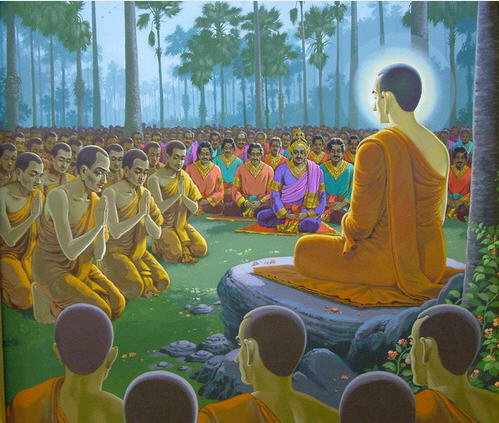
Amartya Sen’s original work from Identity and violence: The illusion
of destiny. Penguin Books India, 2007; pp. 74-77:
As was discussed
in the first chapter, this book is especially concerned with the conceptual
framework within which these confrontations are seen and understood, and how
the demands of public action are interpreted. A confusing role is played here
by the reliance on a single categorization of the people of the world. The
confusion adds to the flammability of the world in which we live. The problem I
am referring to is much more subtle than the crude and abusive views that have
been expressed about other cultures by people in the West, like the
irrepressible Lieutenant General William Boykin of the U.S. Army (whose claim
that the Christian God was “bigger than” the Islamic God was discussed in the
first chapter). It is easy to see the obtuseness and inanity of views of this
kind.
What, however, can
be seen as a bigger and more general problem (despite the absence of the
grossness of vilification) are the possibly terrible consequences of
classifying people in terms of singular affiliations woven around exclusively
religious identities. This is especially critical for understanding the nature
and dynamics of global violence and terrorism in the contemporary world. The
religious partitioning of the world produces a deeply misleading understanding
of the people across the world and the diverse relations between them, and it
also has the effect of magnifying one particular distinction between one person
and another to the exclusion of all other important concerns.
In dealing with
what is called “Islamic terrorism,” there have been debates on whether being a
Muslim demands some kind of strongly confrontational militancy, or whether, as
many world leaders have argued in a warm— and even inspiring— way, a “true
Muslim” must be a tolerant individual. The denial of the necessity of a
confrontational reading of Islam is certainly appropriate and extremely
important today, and Tony Blair in particular deserves much applause for what
he has done in this respect. But in the context of Blair’s frequent invoking of
“the moderate and true voice of Islam,” we have to ask whether it is at all
possible— or necessary— to define a “true Muslim” in terms of political and
social beliefs about confrontation and tolerance, on which different Muslims
have historically taken, as was discussed earlier, very different positions.
The effect of this religion-centered political approach, and of the
institutional policies it has generated (with frequent announcements of the
kind, to cite one example, “the government is meeting Muslim leaders in the
next vital stage designed to cement a united front”), has been to bolster and
strengthen the voice of religious authorities while downgrading the importance
of nonreligious institutions and movements.
The difficulty
with acting on the presumption of a singular identity— that of religion— is
not, of course, a special problem applying only to Muslims. It would also apply
to any attempt to understand the political views and social judgments of people
who happen to be Christian, or Jewish, or Hindu, or Sikh, by relying mainly— or
only— on what their alleged religious leaders declare as spokesmen for their
“flocks.” The singular classification gives a commanding voice to the
“establishment” figures in the respective religious hierarchy while other
perspectives are relatively downgraded and eclipsed.
There is concern—
and some astonishment— today that despite attempts to bring in the religious
establishment of Muslims and other non-Christian groups into dialogues about
global peace and local calm, religious fundamentalism and militant recruitment
have continued to flourish even in Western countries. And yet this should not
have come as a surprise. Trying to recruit religious leaders and clerics in
support of political causes, along with trying to redefine the religions
involved in terms of political and social attitudes, downplays the significance
of nonreligious values people can and do have in their appropriate domain,
whether or not they are religious.
The efforts to
recruit the mullahs and the clergy to play a role outside the immediate
province of religion could, of course, make some difference in what is preached
in mosques or temples. But it also downgrades the civic initiatives people who
happen to be Muslim by religion can and do undertake (along with others) to
deal with what are essentially political and social problems. Further, it also
heightens the sense of distance between members of different religious
communities by playing up their religious differences in particular, often at
the cost of other identities (including that of being a citizen of the country
in question), which could have had a more uniting role. Should a British
citizen who happens to be Muslim have to rely on clerics or other leaders of
the religious community to communicate with the prime minister of his country,
who has been particularly keen to speak through the religious leaders?
Streamlining Sen’s ideas:
Republicans in US,
no matter how artificially indolent or artlessly clever are they, find
themselves elegant to quote their deified President Ronald Regan’s words of his
inaugural address in 1981, “In this present crisis, government is not the
solution to our problem; government is the problem”. Congruent with Regan’s
thoughts, the historical words of Buddha overtly declared to we followers, “monks
(being infatuated with greed, arrogance and especially sumptuousness), are real
problem-makers to besmirch my teachings (Buddha’s Sarsana)”, implicitly
informing us if we know who definitely are stirring the gamut of these troubles
against our peace and wisdom, we shall not be that gullible to impress these trouble-makers
as our saviors from nasty medleys that these jaded bedlams are relentlessly
creating for us.
Ironically, while
Buddha disparaged monks as incorrigible disfigurers of his reputation, he never
assumed his teachings (Sarsana) would ever have come under some threat of
elimination in any quagmire situation. “Unperturbed and no-hold-barred, my Brahmin”,
Siddhartha Gautama announced to Subhuti, who was his most erstwhile friend to
be met after his enlightenment and his latest real-time streamliner to be
taught before his death, “as long as there are individuals who love to follow the practices of my teachings, for
sure, our loving earth will never be bereft of the Enlightened”. Buddha is the
kind of person the philosopher of Open
Society and its enemies will admire: “If you really like to live in a true
republic, never love any the classified, love everybody in your surroundings”,
Karl Popper expressed his abhorrence against Plato’s Republic by exposing hypocrisy of plutocracy and nativism that his
great predecessor’s archetype was popularizing to deceive new coming
generations of navies. Never ever attempted to exclusively endorse his own
creed, nor having any proclivity to appraise even his closest disciples as the
classified, Buddha can safely be described as one of the earliest
individualistic liberal stars known to an open earth. Simpatico with the open
society advocate Popper who intolerantly despised hegemony of pompous
philosopher kings, Buddha did not see any necessity of tolerance for the role
of “the Sanga-the collected, the classified, the blessed” as being beneficial
for the propagation of his simple teachings, but the Lord envisioned “the
Sanga-the individuals, the ordinary, the cursed” as the staunchest apologists who
by themselves barring none are honing in on his Open Land.
Of course, this
clear hermeneutic interpretation of Buddha’s words will barely be any fun to
the colluded 969 monks of Burma. Nonetheless, these Burmese bourgeois will
claim current problems of our society are too imminent so the Biblical
principles of Buddha are at the least, temporarily inapplicable to the current
myriad of out social situations and our people must be pragmatic and expedient
in landing our inevitable duties of struggles and exercising our right of
defense for sustaining our creed. Let us agree with them their proclaimed
plethora of challenges are prevailing our more and more globalized society, terrorists’
threat; perilous social situations of Buddhist women; loss of natives’ rights
in their own land, but as they said let us be duly pragmatic to ask ourselves
and these hero monks, “are the duties for ameliorating our fundamental social
problems belonging to the shoulders of the monks? If so what duties our
laymen’s shoulders are for?”
Political and
social problems are but the mundane affairs to be addressed by ordinary
civilians and are not the obligations that bind supermen hermits to serve as enlightened
jigsaw-solvers cum their noblest myth. If I am not prototyping spuriously, we
clearly know mythical monks usually are not self-experiential with mishmashes
of our societal life full of unpredictable and many incomprehensible clamor and
turmoil. If they are not self-experiential, how can they say their
understanding of our situation is pellucid? How they do are feeling the
severity of pain and affliction as we laymen do? The literal knowledge of the
complex non-religious civilian world, that the mythical classified might
possess by hearing or reading, is by no means, a serious match to our civvies’ capabilities
of developing individual insights to discriminate the depths and shallows of
our problems, breeding our cleverness to winnow the chaff from the wheat, and
bearing our learned tactfulness for manipulating our own affairs. For all those
kinds of maturity, only we the unclassified, outsiders (in those mysterious
persons’ blatant views) and crackpots are self-reliant partisans to combat unsteady
blows of turmoil and tribulation that are too regular or not unexpected.
Turning back to my hermeneutics, Teacher
Buddha himself did not see monks’ wisdom as much useful for sympathizing with myriad-minded
individual experiences. That thought rendered Buddha to hypothesize that even
in their subject of so-called mastery of metaphysics, his monks can barely find
skillful means that fit rightly to soothe diversely difficult individual
situations. Buddhist hermeneutics interpretations which publicly undermine the
role of monks even for the major impacts on one unknowable other’s spiritual enlightenment, will willingly agree
with the viewpoint from our current Apollonian pragmatic analysis that suggests the role of these earnest and callow
monks in taking the challenges of scrambled social affairs of various undergirds
is trivial at large.
To that end, a policy that dramatizes sorcerer monks
should participate in social affairs for acting as bellwethers for directing their
herds is an absolutely malign misconception. On top of that, such anachronistic
placement of peddling religious power in front of our general social affairs
eclipses the need for development of open
society in Burma, which will open its doors to welcome numerous diverse
social characters to be all-too inclusive, barring none. Having no will to hide
for condemning such obtuse and inane nepotism towards the religion’s guys
flamboyantly meddling with social affairs, the writer of the Declaration of
Independence of America, Thomas Jefferson, famously wrote his comments for
Spanish nations in one of his sincerely polite, humble letters, "History, I believe, furnishes no
example of a priest-ridden people maintaining a free civil government. This
marks the lowest grade of ignorance of which their civil as well as religious
leaders will always avail themselves for their own purposes".